Whether you’re an experienced manager looking to sharpen your approach or an aspiring leader looking for the right methods from the start, this guide to being a more effective manager is your resource for the proven, practical strategies that we have seen work with managers across industries and levels.
What we see in our work is that management capability isn’t something people either have or don’t have — it is a collection of repeatable practices. So we’ve included a carefully curated list of tools, exercises and methods to help you lead more effectively, enhance collaboration and work smarter not harder.
From delegation to communication, meetings to mindset, these tools can help you foster a culture of growth, empowerment, and performance within your team and organisation.
These simple practices can amplify your effectiveness and revolutionise the way you lead and manage.
Part 1: Managing Personal Productivity and Time
1. How can managers build productivity habits that last?
What we often see in our work is that productivity tactics rarely stick because people are easily overwhelmed by the speed and volume of day-to-day demands. There’s tons of productivity advice out there, and you’ve probably tried a lot of it – but how much of it actually sticks? Here are a few of our top productivity tips to help you work smarter not harder, that are straightforward to implement and make a real difference:
- Batch your emails: Work on email at predetermined slots rather than leaving your inbox open all day.
- Start your day from your calendar, not your inbox: Taking just a few seconds to pause and reflect before looking at email completely changes the trajectory of your day.
- Plan your work before doing it: Block out a weekly review in your calendar—time spent thinking and planning is just as important as time spent doing.
👉 For a deeper look at productivity workflows that stick, read our full breakdown of six productivity tips that work and last.
2. How to prioritise tasks when everything feels urgent
When organisational pressure builds, everything starts to look like a top priority. This creates a bottleneck where teams can get stuck, unsure of where to focus their energy or what to do next. The Impact Effort Matrix is a simple tool that helps you and your team sort through the noise, map out your workload, and align on what actually matters most.
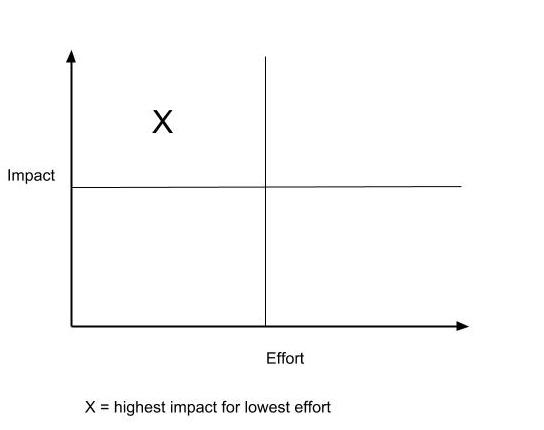
Here is how you can use the matrix to get clarity and categorise and prioritise your tasks:
- Focus on quick wins: Identify the tasks that offer high impact for low effort. Clearing these first builds immediate momentum for the team.
- Only schedule one or two bigger projects: Keep a small number of high-impact but high-effort initiatives active at any one time, as they require significant long-term effort and focus.
- Filter out thankless tasks: If you can stop low-impact, high-effort tasks, it frees up the capacity needed to focus on your high-impact projects instead.
👉 For a practical guide on how to run this exercise with your team, read our full breakdown of how to prioritise using the Impact Effort Matrix.
Part 2: Protecting your time
3. How can you reduce the time spent in unnecessary meetings?
When calendars become overloaded, your team’s capacity to do the work shrinks. It is easy for an organisation to default to scheduling a meeting for every conversation, but this endless cycle directly impacts productivity and leaves people with no time left for the work that matters. Breaking this pattern requires shifting the expectation around how updates are shared and how decisions get made.
Here are a few practical ways to start reclaiming your calendar:
- Do not go to meetings: Delegate someone else to go instead. This frees up your schedule while giving team members an opportunity to step up and take ownership.
- Try 20- or 50-minute meetings: Shorten your default meeting times by shifting standard 60-minute blocks to 50 minutes, and 30-minute catch-ups to 20 minutes. This immediately builds essential breathing room and transition time into your day.
- Establish a clear purpose upfront: Decline or challenge invitations that do not have a defined objective or agenda. If you are only required to listen to information rather than contribute to a decision, ask for the meeting notes afterward instead of attending.
👉 For a comprehensive guide on how to free up your schedule, read our full breakdown of eight ways to cut down on meetings.
4. How to handle constant workplace interruptions
Interruptions are a reality of organisational life and stand out as one of the biggest challenges managers face. When your day is fragmented by ad-hoc queries, it breaks your focus, causes decision fatigue, and leaves you feeling completely reactive. Protecting your time isn’t about shutting your team out, it is about creating clear, predictable boundaries so you can actually get your own work done.
Here are a few practical ways to stay focused and manage daily disruptions:
- Mark in your calendar when you’re not available: Let your phone go to voicemail, don’t look at emails, and set your Teams or Slack to show you’re busy. Crucially, negotiate with your team beforehand on how they can contact you if a genuine emergency arises.
- Work away from your desk: Go and sit somewhere else where you can’t be easily found. This is particularly relevant when you are office-based, but if you are working remotely, it can mean moving to a café or a library to get away from digital noise.
- Batch the questions: Encourage your team to gather their non-urgent points and bring them to your scheduled 1-on-1 meetings, rather than escalating every thought the moment it occurs.
👉 To help you regain control of your schedule, read our 4 simple things you can do to overcome interruptions.
Part 3: Managing and empowering your team
5. How managers can get better at delegating
Delegation is a fundamental management skill, yet it is often where communication breaks down, leading to frustrating micromanagement or project delays. When tasks are handed over with vague parameters, teams struggle to move forward because they lack the clarity needed to take full ownership. To prevent this, we use a simple alignment tool called CPORT, it’s a framework to clarify expectations and uncover critical steps and risks before any work begins.
When assigning work, ensure you and your team members have explicitly discussed these five dimensions:
- Context: Why is this work being done right now?
- Purpose: What is the objective of the project?
- Outcomes: What does a successful outcome look like?
- Resources: What tools, budget, or support are needed?
- Time: What are the milestone check-ins and final deadlines?
👉 For a full breakdown of this technique – including common pitfalls, critical questions and real-world examples – read our full guide to how to use CPORT to delegate to your team.
6. What three questions should every manager ask to build staff engagement?
Genuine staff engagement is built on clarity, but many teams operate with an underlying sense of uncertainty about where they stand. If your team members cannot easily answer basic questions about their role and performance, they run the risk of professional drift. When money is the only clear measure people have for how they are doing, it creates a systemic risk for your organisation.
To check alignment and build motivation, ensure your team can confidently answer these three foundational questions:
- What is expected of me? Clear expectations stop people from guessing what their priorities should be.
- How am I doing? Feedback helps people understand their progress and feel recognised.
- Where am I going? Knowing this helps people have direction and purpose.
👉 If you want to test this out with your own team, read our full guide on the three powerful questions that build staff engagement.
Part 4: Improving communication makes you a more effective manager
7. How to make sure people hear what you say
It is easy to assume that because a message has been delivered, it has been fully understood. Miscommunication and misunderstanding is remarkably common within busy organisations, and simply passing on information does not mean it has been absorbed. When instructions are filtered through different team priorities and pressures, the core message can easily get lost. Introducing a simple habit like the Replay tool can change this, ensuring everyone is genuinely aligned before a conversation ends.
To run a Replay exercise yourself with your own team, follow these steps:
- Share your message or plan clearly: Present the information, context, or change to your team concisely.
- Break into small groups: Split the team into small breakout groups and give them 5–10 minutes to discuss and replay to each other what they just heard you say.
- Have each group share back: Have each group play their understanding back to the room so that the team can self-correct and you can clarify any immediate misunderstandings together.
👉 For a comprehensive guide on running this exercise, read our full breakdown of how to use Replay and make sure people hear what you say.
8. How to turn frustrating team discussions into productive conversations
Despite how much time you spend in meetings or how many plans you make, it can still be incredibly hard to get everyone onto the same page and make things happen. Better conversations naturally lead to better actions, but teams often default to unspoken assumptions rather than clear communication. Introducing low-stakes, structured tools can help convey meaning and surface different opinions safely.
Here are three tools you can use to structure more productive team discussions:
- Team Canvas: A collaborative framework used to align your team on shared values, clear individual roles, and expected project outputs.
- Expressive Drivers: A light communication framework that helps team members identify their conversational preferences and build mutual empathy.
- Planning Poker: A quick, playful technique to surface hidden disagreements by encouraging everyone to share and explore conflicting project timelines or expectations simultaneously.
👉 To see how to facilitate these exercises with your own group, read our full breakdown of four tools for better conversations with your team.
9. How to stop avoiding difficult conversations
Putting off awkward conversations and ignoring performance or behavioural issues hoping they will magically resolve themselves usually makes matters worse. While avoiding conflict might seem like an easy way out, it quickly hampers your team’s ability to grow, blocks decision-making, and quietly erodes trust. When addressed directly and with empathy, these challenging discussions become the exact points where clarity and real progress are unlocked.
Here is a step-by-step framework you can use to handle these discussions constructively:
- Confront the issue directly: Face the situation head-on rather than delaying. Putting it off only prolongs the problem and increases anxiety, whereas addressing it quickly prevents unhelpful patterns from becoming entrenched.
- Use ‘I’ statements: Structure what you say by using the format: “I feel X when you do Y, and [how it affects the work]”. This allows you to express your perspective truthfully and clearly without causing the other person to become immediately defensive.
- Use the FONT to balance the conversation: Observe the conversation through four categories Feelings, Opinions, Needs, and Thoughts. If someone becomes highly emotional, ground the conversation by pointing to the objective facts; if they bombard you with purely defensive facts and figures, shift the dynamic by asking how they feel about the situation.
👉 To learn how to navigate these sensitive conversations with more confidence, read our full manager’s guide on how to master difficult conversations with confidence and compassion.
10. How to give and receive feedback that actually makes a difference
Giving and receiving staff feedback can be a daunting, awkward task, yet it is a vital catalyst for personal development and growth. Too many people have had unhelpful, anxiety-inducing experiences with feedback, often because it is reduced to cold performance metrics or saved for an annual review. Shifting this requires treating feedback as a safe, qualitative development tool rather than a punitive measurement exercise.
To ensure feedback conversations actually drive progress, look to break these three common unhelpful patterns:
- Don’t save feedback for the annual review: Saving up observations for a single, high-stakes meeting once a year creates intense anxiety and focuses entirely on the past. Little and often is much better than feedback once a year.
- Don’t make it about the person: If there is a problem with someone, being specific can be really helpful. But make it about the behaviour, not the person. The behaviour is the problem, not ‘you’re the problem’.
- Don’t criticise people in public: It’s good to occasionally praise people in public, it’s never good to criticise people in public. It’s humiliating and they will hide mistakes in future.
👉 To discover a framework that makes development conversations much more meaningful, explore 360 feedback as an option for feedback that gathers a balanced, whole-group perspective rather than relying on a single person’s point of view.
Part 5: Essential tools for building mindset, agency and performance
11. How to help your team overcome a feeling of powerlessness
When teams face complex challenges or unwieldy bureaucracy, it is easy for a sense of powerlessness to set in. This lack of agency drives collective anxiety and leaves people feeling stuck. Using the Circles of Influence framework – developed by management guru Stephen Covey – helps teams shift out of a stuck mindset, map out their challenges objectively, and realise that they almost always have more options than they think.
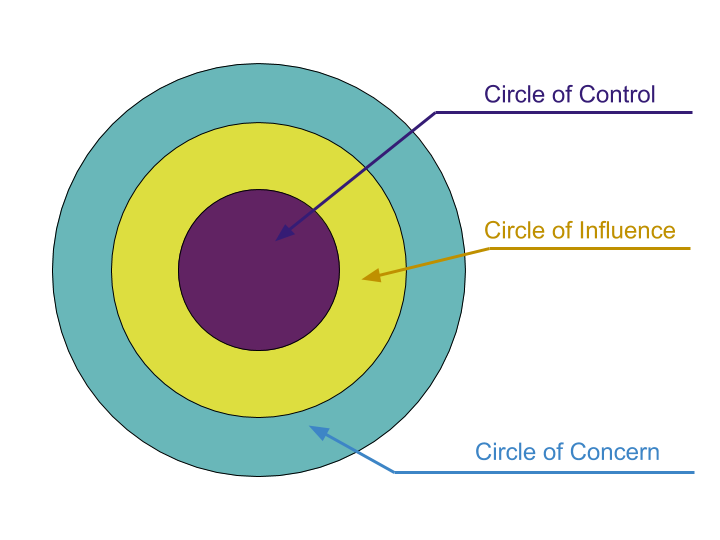
Here is how you can use the Circles of Influence exercise to build resilience and find a proactive path forward:
- Map your Circle of Concern: Have your team write down all their current anxieties, blockers, and challenges onto individual sticky notes. The task is to realise which of these things are inside and which outside of your control, and work on the things that you can.
- Identify the Circle of Control: Draw a smaller circle in the absolute centre and move the sticky notes that the team can actively and directly control into it. This brings immediate, comforting clarity to what is genuinely within people’s power to fix.
- Expand your Circle of Influence: Get team members to look at the ways they could influence some of the things that they feel are out of their control. Go through all the notes that are in the Circle of Concern and together try to move them into the Circle of Influence. Brainstorm small, actionable steps to influence other stakeholders and gradually pull those concerns into your inner circles.
👉 To help your team build a more proactive mindset and reduce workplace anxiety, read our full guide on how to unlock your team’s potential using Circles of Influence.
If all the attention is focused solely on problem processes and not enough on how you relate to each other, nothing will really change. Inspired by Olympic rowing strategies, “Make the Boat Go Faster” is a simple visual tool designed to help teams map out what is holding them back and figure out what they can do about it. The true value of the exercise is that it creates the right conditions to move past superficial process complaints and have deeper, honest conversations about your actual team dynamics. Inspired by Olympic gold medalist Ben Hunt-Davis, it’s a way to identify what’s holding your team back, and how to overcome that.
Here is how you can facilitate this exercise with your team:
- Map out your wind, and anchors: Draw a picture of a boat on a wall to represent your team or organisation. Have everyone write their thoughts on sticky notes and place them on the drawing: things that fill the sails and drive you forward go at the top (the wind), while things holding you back go at the bottom (the anchors).
- Reduce the drag and maximise propulsion: Open up a collective conversation about how the team can actively “cut the anchors off” and make the most of the wind. Use this stage to guide the team away from external, unfixable issues and focus on what they can directly change or influence together.
- Discuss the deeper dynamics: Use the notes as a starting point to unpick what people really mean by process complaints. Actively move the conversation through distinct layers—shifting from basic system and resource issues, up to how you function as a group, and finally to how you connect with each other emotionally.
👉 For a step-by-step guide on how to run this exercise with your own group, read our full breakdown of how to use ‘Make Your Boat Go Faster’ to improve team performance.
Final thoughts on being an effective manager: lead smarter, not harder
By adopting the strategies, insights, and tools outlined here, you’ll be equipped to navigate the complexities of leadership, with confidence.
Remember, being an effective manager is not just about optimizing processes and achieving targets; it’s about fostering a culture of growth, empowerment, and collaboration.
As you continue to refine your skills, never underestimate the impact of empathy, continuous learning, and adaptability. Embrace the challenges, celebrate the victories, and keep pushing the boundaries of your leadership capabilities. The road ahead is rich with possibilities, and the tools we have outlined here will help to steer your team and organisation towards a future of sustained success.
Key Takeaways: Core Principles for Effective Management
- Build sustainable productivity habits: Start your workday from your calendar rather than your inbox, batch check emails, and reserve dedicated time for weekly planning.
- Protect time and focus: Shorten default meeting durations (to 20 or 50 minutes), decline agenda-less meetings, and set clear boundaries against daily disruptions.
- Delegate with clarity: Define delegated tasks around five essential parameters: Context, Purpose, Outcomes, Resources, and Time.
- Master direct communication: Address difficult issues directly using clear “I” statements, and perform alignment checks to ensure true understanding.
- Empower team performance: Ensure every team member consistently understands expectations, receives constructive feedback, and knows how their work contributes to team goals.
Developing your management practice: